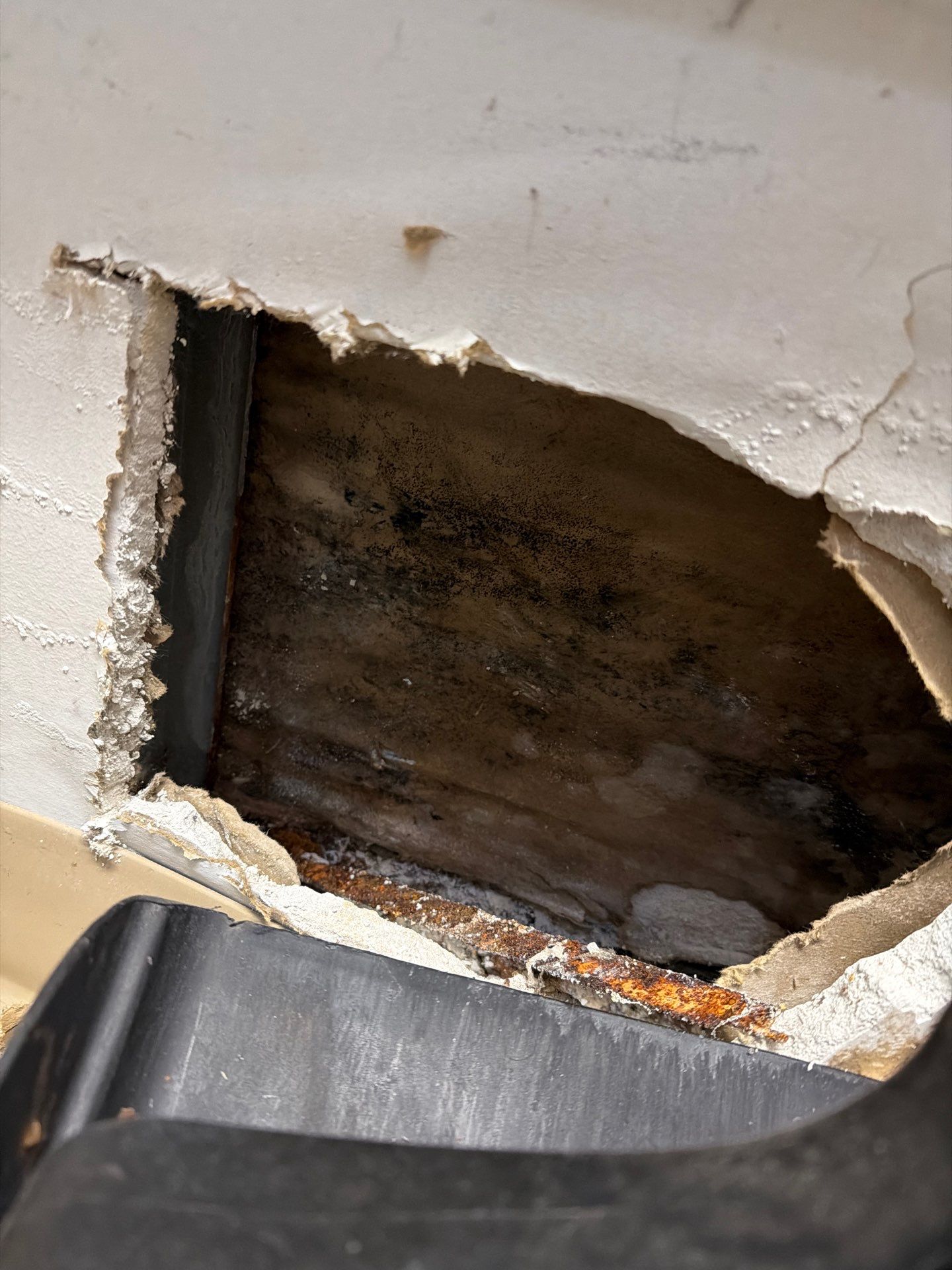
Why AC Condensate Leaks Cause More Damage Than You Expect
Your AC pulls humidity out of the indoor air and that moisture drains through a small PVC line, usually three quarters of an inch, that exits to a floor drain, a condensate pump, or outside. A typical residential system in Bellwood produces five to twenty gallons of condensate per day during peak humidity. When the line clogs with algae, dust, or biofilm, that volume backs up into the drain pan and overflows. If the secondary pan is missing, rusted, or the float switch failed, water finds the path of least resistance. That path is almost always drywall, insulation, and the framing below.
The damage is rarely dramatic on day one. You might see a small stain on a bedroom ceiling under an attic air handler, or a damp patch on basement drywall under a closet unit. Inside the wall cavity, the picture is worse. Wet fiberglass insulation loses R-value and stays wet for weeks. Paper-faced drywall begins to support mold growth in 24 to 48 hours. If the leak has been running through a wood subfloor, you may already be looking at subfloor water damage detection and repair, not a simple patch job. Condensate is technically clean water, IICRC Category 1, but once it sits in building materials for more than 48 to 72 hours it degrades to Category 2 grey water, with bacterial growth and a noticeable musty smell.
Attic-mounted air handlers are the worst offenders because gravity works against you and the unit sits directly above living space. A horizontal coil with a sloped drain pan only needs a quarter inch of debris at the trap to back up. Closet and basement units fail differently. The pan overflows sideways into adjacent framing, soaking baseboards and the bottom plate before anyone notices a stain. Knowing where your air handler sits helps you predict which assemblies are at risk and how aggressively to inspect after a humid stretch.
The Decision Table: Matching Your AC Leak to the Right Response
The table below is the one we walk homeowners through on the phone. Find the row that matches what you are seeing, then read the implications underneath. The cost ranges reflect what we see in the Bellwood market in 2024, and they assume standard access, not unusual demolition.
| Scenario | Likely Cause | Water Category | Who to Call First | Typical Cost Range | Drying Timeline |
|---|---|---|---|---|---|
| Small ceiling stain under attic unit, dry to touch | Slow line drip, recently stopped | Category 1 | HVAC technician | $150 to $400 (line clear + paint touch up) | None, monitor only |
| Active drip from ceiling, wet drywall, contained | Clogged condensate line, full drain pan | Category 1, fresh | HVAC, then restoration if drywall is saturated | $800 to $2,500 | 3 to 5 days |
| Sagging ceiling tile or bulging drywall | Sustained leak, 1 to 4 weeks | Category 2 (degraded) | Restoration company immediately | $2,000 to $6,000 | 5 to 8 days |
| Musty smell, no visible water, AC running hard | Hidden leak inside wall cavity | Category 2 likely | Restoration with moisture mapping | $1,500 to $5,000 | 5 to 7 days |
| Water dripping into finished basement from above | Failed secondary pan or pump | Category 1 to 2 | Restoration first, then HVAC | $3,000 to $9,000 | 5 to 10 days |
| Visible mold around register or air handler | Long-term moisture, 30+ days | Category 3 risk | Mold remediation + restoration | $4,000 to $12,000+ | 7 to 14 days |
What the Table Means for Your Next 24 Hours
The first three rows are the most common calls we get in Bellwood. If your stain is dry and small, an HVAC tech clearing the line and adding a float switch is often the whole fix. If drywall is actively wet, the clock starts the moment water touches paper-faced gypsum. Drying within 48 hours usually saves the material. Past that window, removal becomes more cost effective than drying, because mold spores have already colonized the back side of the board. We use thermal imaging and pin meters to map exactly how far moisture has traveled, which prevents the common mistake of cutting too little drywall and finding more damage three weeks later.
The bottom three rows are where homeowners lose money by waiting. A sustained leak from an attic unit can saturate ceiling joists, wet the insulation across an entire bay, and drip down to the floor below. By the time you smell it, the wall cavity is a closed humidity chamber. This is the same pattern we see with water damage behind walls and hidden leak detection on plumbing failures. The difference with AC leaks is that the source keeps running every time the unit cycles, so the damage compounds daily until someone shuts off the system or clears the line.
Two actions buy you the most time in the first hour. Turn the thermostat to off, not just up, so the unit stops producing condensate. Then place a bucket and old towels under the active drip and pull back any nearby rugs or stored items. If you can safely reach the air handler, look for the float switch wire and confirm it tripped. A surprising number of leaks happen because the switch was bypassed during a previous service call and never reconnected.
Insurance, Documentation, and What to Photograph Now
Most homeowner policies in Indiana cover sudden and accidental AC leaks but exclude long-term seepage. The line between the two is usually 14 days. If you can document that the damage was discovered immediately and the system was serviced recently, you have a stronger claim. Photograph the stain, the air handler, the drain line, and any standing water. Save the HVAC invoice. When Bellwood Water Restoration writes a scope, we include moisture readings, affected square footage, and IICRC-aligned drying logs that adjusters in Bellwood recognize, which speeds approvals on the broader water damage restoration work.